Easter Bunny Floral Garden: A Designer's Review
As a designer who spends more time staring at stitch simulations than most people care to admit, I approach every new machine embroidery design with a mix of excitement and skepticism. We've all been there: you buy a beautiful digital embroidery file, only to find out the density is too high for a baby onesie or the details vanish on a textured towel. So, when I got my hands on the Easter Bunny Floral Garden 20oz Tumbler graphics, I didn't just look at them as tumbler wraps; I looked at them through the lens of an embroiderer. Could this vibrant, spring-themed artwork translate into thread? Would it hold up on a custom apparel piece or a boutique tote bag? Here is my practical breakdown of how this design performs in the real world.
First Impressions: Mood and Layout
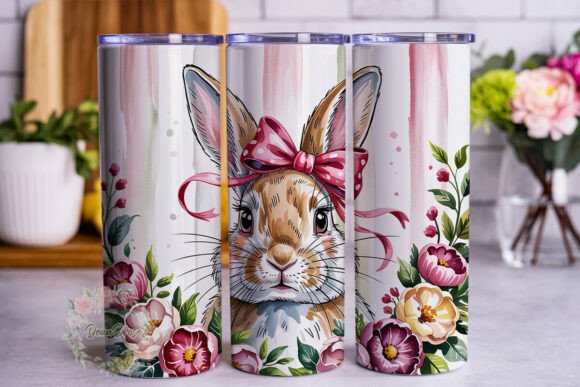
The first thing that strikes me about the Easter Bunny Floral Garden 20oz Tumbler files is the composition. Even though these are provided as high-resolution PNGs intended for Tumbler Wraps and sublimation, the layout speaks directly to embroidery sensibilities. The design features a central bunny figure surrounded by a lush garden of florals. From a stitching perspective, this suggests a wonderful opportunity for mixed techniques. The bunny's ears and body could easily be rendered in soft fill stitch to create a plush look, while the surrounding flowers offer perfect candidates for satin stitch borders or even applique design elements if you want to add dimension.
The mood is undeniably cheerful and seasonal, making it an ideal candidate for holiday embroidery projects leading up to Easter. The balance between the character and the foliage feels organic, not cluttered. For an Etsy seller or small shop owner, this visual personality is gold. It screams "handmade product" without looking amateurish. The 300 DPI resolution ensures that when you zoom in to trace your vector paths or plan your color stops, the lines remain crisp, allowing you to make informed decisions about where to place your running stitch outlines.
Real-World Application: Beyond the Tumbler
While the product title specifies a 20oz tumbler application, limiting this graphic to drinkware would be a missed opportunity for creative entrepreneurs. I immediately envisioned this design adapted for a heavy canvas tote bag design. Imagine a natural-colored canvas bag with this garden scene stitched in vibrant pastels. The floral elements would pop beautifully against the neutral background.
I also tested the concept mentally for sweatshirt embroidery. A crewneck sweatshirt in heather grey or soft pink would provide a fantastic base. The key here is scaling. Since the original dimensions are 9.3″ x 8.2″, you have a large canvas to work with. You could place the full design on the back of a jacket or center it on the chest of an adult hoodie. For baby embroidery, you might isolate just the bunny face or a single cluster of flowers to fit a smaller hoop, creating a sweet motif for a nursery blanket or a personalized bib.
For those running a craft business, versatility is everything. This graphic could serve as the inspiration for an embroidered patch. By digitizing the outline and filling it with dense stitching, you could create iron-on patches that customers can apply to denim jackets or backpacks. The "garden" aspect allows for creative freedom with thread colors; you aren't stuck with standard greens and pinks. You could offer custom colorways—maybe a monochromatic blue version for a gender-neutral baby gift or bright neons for a fun, modern twist.
Technical Considerations and Fabric Challenges
Now, let's get into the nitty-gritty of execution. Because the source files are Graphics (PNGs) and not pre-digitized embroidery files, you or your digitizer will need to convert them. This is where attention to detail matters. The floral garden contains intricate details. If you attempt to stitch every tiny leaf petal with a fill stitch on a stretchy fabric like a t-shirt, you risk puckering. In this scenario, I recommend simplifying the smaller floral elements into satin columns or even omitting the tiniest details to maintain stitching clarity.
Fabric texture plays a massive role here. On a smooth broadcloth or high-quality twill, the fine lines of the bunny's whiskers and the flower centers will shine. However, if you are working on a textured waffle weave or a looped towel, those small details might get lost. For dark fabric, you will need to ensure your digitizing includes a proper underlay to prevent the background color from peeking through the lighter threads of the bunny's fur. A dense underlay is non-negotiable for professional results.
Curved surfaces present another challenge. While the original design is meant for a straight or tapered tumbler wrap, applying this logic to a cap requires careful distortion correction. The top of the bunny's head might need to be shortened slightly to account for the curve of the crown. Always test your design on scrap fabric that matches your final material. This simple step saves hours of frustration and protects your reputation for quality.
Stabilizer and Hoop Selection
Given the likely size of this project if used at or near its original scale, hoop size is a critical factor. You will need a large hoop, possibly a jumbo hoop depending on your machine. If your design exceeds your hoop limits, you may need to utilize a split-hoop technique, though this risks alignment issues in the center of the garden. For a seamless look, consider resizing the design to fit a standard large hoop if your machine doesn't support jumbo sizes.
Equally important is the stabilizer. For a design with this much coverage and potential density, a cut-away stabilizer is usually the safest bet for long-term durability, especially for items that will be washed frequently like custom apparel or kitchen towels. If you are doing a one-off decorative pillow cover that won't see much wear, a tear-away might suffice, but don't gamble on it if you want the finished product to lay flat forever.
Commercial Viability and Brand Value
From a business standpoint, the Easter Bunny Floral Garden 20oz Tumbler design offers strong commercial potential. Customers love seasonal items, and Easter is a huge driver for personalized gifts. Using this design on a personalized gift set—perhaps matching mugs, aprons, and tote bags—can increase your average order value. The cohesive theme helps with brand consistency if you are launching a spring collection.
However, before listing items for sale, you must verify the licensing terms. The product description notes that watermarks are removed upon purchase, but it does not explicitly state the commercial license scope for the PNG files themselves. As a rule of thumb, always confirm whether the creator allows you to use the graphic as a basis for physical goods versus reselling the digital file itself. Most designers allow the former (finished products) but restrict the latter.
Visual appeal drives buyer engagement. A well-executed embroidery version of this design signals professionalism. It shows that you understand design assets and know how to translate a 2D image into a tactile, high-quality object. Whether you are creating a printable mockup for your online store or photographing the actual finished product, the charm of the bunny and the garden will resonate with buyers looking for something unique and heartfelt.
Final Verdict
The Easter Bunny Floral Garden 20oz Tumbler graphic is a versatile, high-quality asset that extends far beyond drinkware. With thoughtful digitizing and careful material selection, it transforms into a stunning embroidery project suitable for everything from boutique clothing to home decor. It invites creativity, challenges you to refine your technical skills, and ultimately delivers a product that brings joy. Just remember to test your stitch density, choose the right stabilizer, and respect the intellectual property rights associated with the file. Happy stitching!