Magical Glowing Beetles 20oz Tumbler Design Review
As a designer who spends more time staring at stitch maps than most people stare at their phones, I approach every new digital embroidery file with a mix of excitement and skepticism. We've all been there: you buy a stunning graphic online, load it up, and realize the density is going to turn your fabric into cardboard or the details are too fine for anything but a showpiece that never gets washed. Today, I'm taking a close look at the Magical Glowing Beetles 20oz Tumbler design. While the product listing categorizes this under Tumbler Wraps and Graphics, my eye immediately goes to how this translates from a high-resolution PNG into a tangible, stitched reality.
First Impressions: Mood and Visual Personality
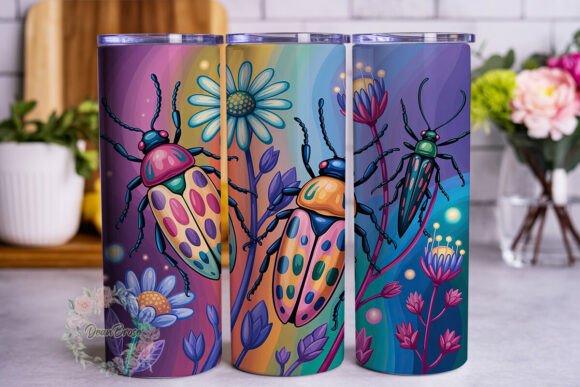
The first thing that strikes me about the Magical Glowing Beetles 20oz Tumbler is its atmospheric quality. The theme suggests a blend of whimsy and nature, likely featuring iridescent shells and perhaps some botanical elements to ground the insects. With dimensions of 9.3″ x 8.2″ and a crisp 300 DPI resolution, the source image offers plenty of clarity. For an embroidery designer, this is crucial. A blurry source file often leads to guesswork when digitizing or adapting a design, but here, the sharp lines suggest that if this were converted into a machine embroidery design, the definition between the beetle wings and the background would remain distinct.
The "glowing" aspect of the title implies a specific color palette—likely neon greens, electric blues, or warm ambers against a darker backdrop. In a stitched format, this translates beautifully to satin stitch work for the highlights and fill stitch for the body of the beetles. It creates a mood that feels perfect for night-time aesthetics or fantasy-themed collections. It's not just a bug; it's a character. This kind of visual personality is exactly what elevates a handmade product from a simple craft to a boutique item.
Real-World Application: Beyond the Tumbler
Although the file is marketed specifically for 20oz tumblers, my brain immediately starts mapping this onto other substrates. Let's imagine a real-life scenario: a client wants a custom embroidered patch for their hiking backpack or a limited-run tote bag design for an eco-conscious brand. The organic shapes of beetles fit perfectly on curved surfaces or irregular patches.
If I were to use this for a sweatshirt embroidery project, the larger scale of the original graphic allows me to scale it down slightly without losing the intricate details of the beetle legs or wing patterns. Imagine a charcoal grey hoodie with these glowing beetles stitched across the chest in vibrant thread colors. The contrast would be striking. Similarly, for baby embroidery, perhaps on a nursery blanket or a soft onesie, a simplified version of this design could serve as a gentle, nature-inspired motif. However, one must be cautious; what works on a rigid tumbler wrap might need adjustment on stretchy knit fabrics.
For Etsy sellers and small shop product creators, versatility is key. This design could easily anchor a "Night Garden" collection, appearing on everything from aprons to pillow covers. The key is understanding that while the source is a Graphics file intended for printing or sublimation on tumblers, the artistic composition holds strong potential for adaptation into commercial embroidery projects, provided you have the rights and skills to digitize it properly.
Technical Considerations and Fabric Challenges
Here is where the experienced designer in me hits the brakes and says, "Hold on." The Magical Glowing Beetles 20oz Tumbler is sold as a PNG file. This is a critical distinction. It is not a pre-digitized embroidery file ready for your machine. You cannot load a PNG directly into most embroidery machines and expect a perfect finished product. To use this for stitching, you would need to digitize it yourself or hire a digitizer to convert the image into a stitch file compatible with your machine.
When converting a high-detail graphic like this, stitch density becomes the enemy if not managed well. The "glowing" effects in the original image likely rely on gradients. In embroidery, we simulate gradients through thread blending or careful layering of satin stitch and running stitch. If you pack too many stitches into the beetle shells to mimic the high-res image, you risk creating a stiff, heavy patch that pulls on the fabric. This is especially true for textured fabrics like towels or thick canvas tote bags.
You also need to consider the hoop size. The original dimensions are quite large (over 9 inches). Most home embroidery machines have a maximum hoop size of 5x7 or 6x10 inches. To stitch this as a single piece, you'd need a large-format machine. Otherwise, you would have to split the design, which introduces alignment challenges, or scale it down significantly. For caps or hats, the curvature adds another layer of complexity. Detailed corners and tiny lettering (if any is added later) can get lost or distorted on a curved surface if the underlay isn't perfect.
Maximizing Value and Customer Trust
Why go through the trouble of adapting a tumbler graphic for embroidery? Because unique designs build brand recognition. In a market saturated with generic applique design options, offering something with the specific artistic flair of the Magical Glowing Beetles 20oz Tumbler sets your craft business apart. When a customer sees a meticulously stitched beetle that captures that "glowing" essence through thread choice, it signals professionalism.
This attention to detail affects customer trust. If you sell a personalized gift that looks sloppy because the stitch count was too high or the stabilizer was wrong, you lose that client forever. But if you take a strong graphic concept and execute it with proper technique—using the right stabilizer for the fabric weight, choosing high-sheen threads to mimic the glow, and ensuring clean trim—you create a piece of art. This increases the perceived value of your custom apparel or home decor items, allowing you to command higher prices.
Practical Designer Notes for Execution
Before you commit to using this design for a client order or a batch of holiday embroidery gifts, here is my checklist for ensuring success:
- Verify the License: The product description notes the files do not include watermarks, but always double-check the licensing terms. Can you use this PNG as a base for digitizing and selling the resulting embroidery? Some graphic licenses prohibit derivative works.
- Test on Scrap Fabric: Never stitch a new design on your final product first. Test your digitized version on the exact same fabric type you plan to use. Check for puckering or registration issues.
- Thread Color Contrast: Since the theme is "glowing," select thread colors that pop against your base fabric. Metallic or variegated threads could enhance the magical effect.
- Review Stitch Density: If you are digitizing this yourself, reduce fill density in large areas to keep the fabric soft, especially for wearables like t-shirts or baby clothes.
- Check Small Details: Zoom in on the beetle legs and antennae. These thin lines may need to be simplified into a running stitch or thicker satin columns to prevent breakage during washing.
- Mockup Testing: Create black and white mockups to ensure the design reads well without relying solely on color. This helps identify if the contrast is sufficient for the stitch types you plan to use.
- Stabilizer Selection: For dark or stretchy fabrics, a cut-away stabilizer is often safer than tear-away to prevent distortion over time.
In conclusion, the Magical Glowing Beetles 20oz Tumbler is a visually compelling asset. While it arrives as a graphic for Tumbler Wraps, its strong composition makes it a prime candidate for creative adaptation into embroidery projects. With careful digitizing, thoughtful material selection, and a respect for the technical limits of embroidery machinery, this design can transform from a digital image into a stunning, tactile element of your next boutique branding effort or printable mockup portfolio. Just remember: the magic isn't just in the image; it's in the execution.